If you’ve ever looked at a café menu and thought, “Wait… what’s the difference between all these matcha drinks?” you’re definitely not alone.
A few years ago, I probably would’ve just ordered whatever looked the prettiest on Instagram. Now, after trying way too many matcha lattes (and spending way too much money on them), I’ve realized that not all matcha is created equal. Some cafés serve smooth, naturally sweet matcha that’s rich and earthy, while others… well, let’s just say they taste more like grass than anything else.
The good news is that once you know a few basics, ordering matcha becomes a lot less intimidating. Whether you’re trying your first matcha latte or you’re looking to branch out from your usual order, here’s everything I wish I knew when I first got into matcha.
So… what exactly is matcha?
Unlike regular green tea, where you steep tea leaves in water and toss them out, matcha is made from finely ground green tea leaves. That means you’re actually drinking the whole leaf, which gives matcha its vibrant green color, stronger flavor, and higher concentration of antioxidants.
It’s also why matcha has a different kind of caffeine. Instead of giving you the quick spike (and crash) that coffee sometimes does, many people find that matcha provides a more steady, gradual energy throughout the day.
For me, it’s the perfect middle ground. I still love coffee, but there are days when I want something a little lighter without feeling like I need another espresso.
Why does some matcha taste amazing while others taste… not so great?
This was probably the biggest surprise for me.
I used to think I just didn’t like matcha because every cup I tried tasted bitter. It wasn’t until I started visiting specialty cafés that I realized the quality of the matcha makes a huge difference.
Good matcha should taste smooth, slightly sweet, and earthy without being overpowering. If your drink tastes extremely bitter or dull in color, it could be because lower-quality matcha was used or it wasn’t prepared properly.
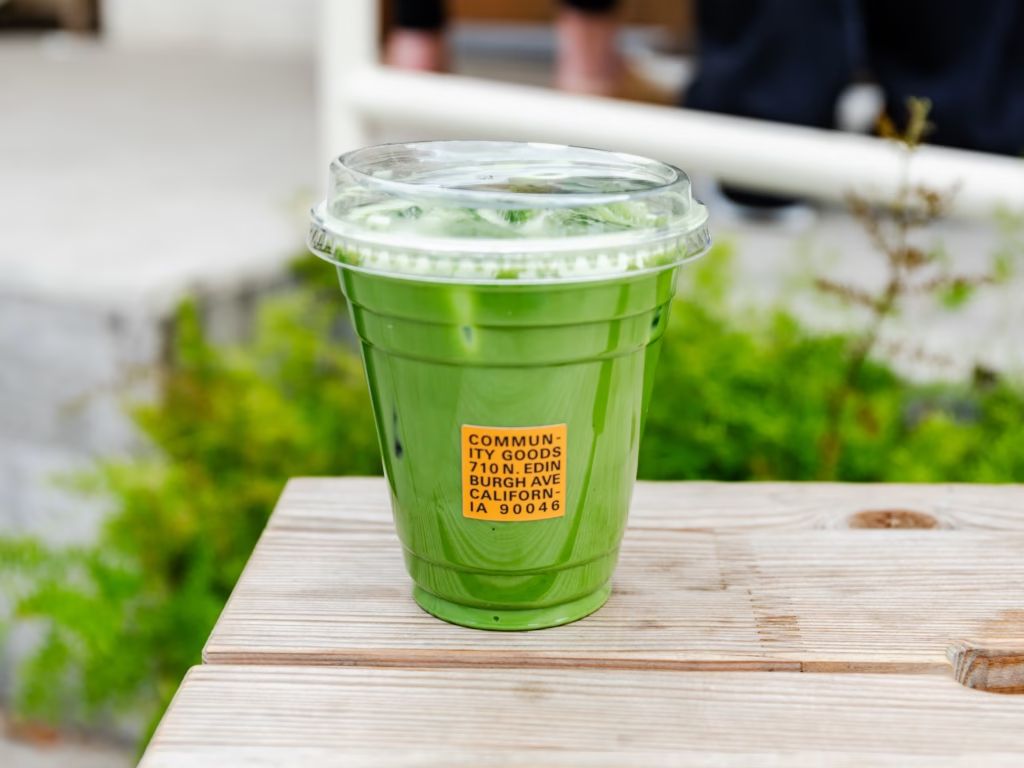
One of the easiest things to look for is the color. High-quality matcha is usually a bright, vibrant green, while lower-quality matcha tends to look darker or more yellowish-green.
Ceremonial grade vs. culinary grade
You’ll probably hear these terms a lot if you start shopping for matcha.
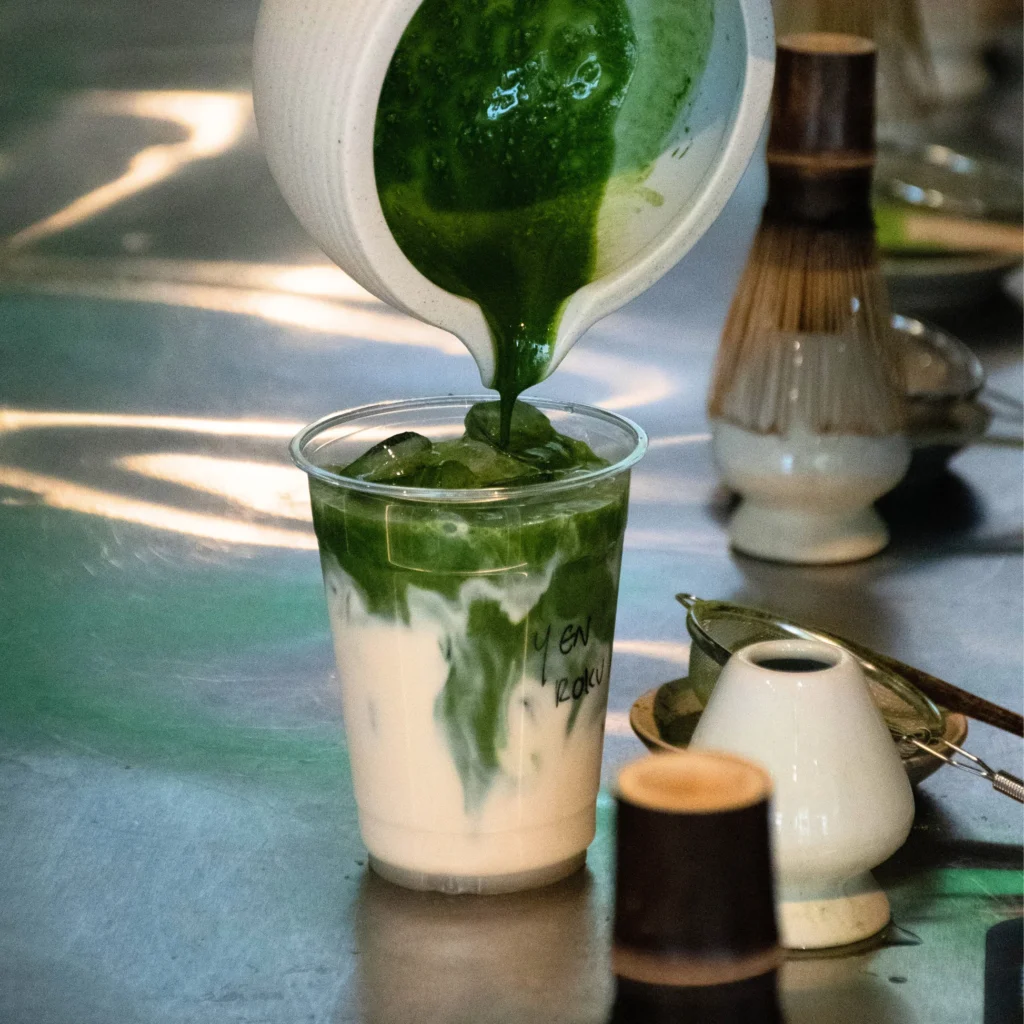
Ceremonial grade is generally considered the highest quality and is meant to be enjoyed on its own with water. It has a smoother flavor and is usually what you’ll find at cafés that specialize in matcha.
Culinary grade is designed more for baking, smoothies, desserts, and flavored drinks. It’s still perfectly good, but it’s typically stronger and a little more bitter because it’s meant to be mixed with other ingredients.
If you’re making matcha lattes at home, either can work depending on the flavor you’re looking for, but if you’re drinking matcha by itself, ceremonial grade is usually the better choice.
If it’s your first time ordering matcha…
Don’t overthink it.
My recommendation is to start with an iced matcha latte.
It’s creamy, easy to drink, and a great introduction if you’re not used to the flavor. If you normally like sweeter drinks, you can always ask for a little sweetener, but I’d avoid making it overly sweet since that can mask the actual taste of the matcha.
Once you get used to it, try ordering one with less or no sweetener. You’ll start to notice the natural flavor much more.
Matcha isn’t supposed to taste like sugar
This was something I had to learn.
If your only experience with matcha has been heavily sweetened drinks, trying a higher-quality matcha can actually be surprising. It’s not supposed to taste like vanilla or caramel. Instead, it has a fresh, grassy, slightly earthy flavor that’s balanced by a subtle natural sweetness.
That’s part of what makes a really good matcha so enjoyable.
Hot or iced?
I honestly don’t think there’s a right answer—it just depends on what you’re in the mood for.
I almost always order mine iced because I like how refreshing it is, especially during the summer. But on colder days, a hot matcha can be incredibly comforting.
If you’re trying matcha for the first time, I’d probably recommend starting with an iced latte. It’s usually a little easier for beginners.
Don’t judge matcha based on one café
One bad matcha doesn’t mean you don’t like matcha.
I made that mistake.
The first few I tried weren’t anything special, so I assumed it just wasn’t for me. But after trying matcha from cafés that really focus on quality, my opinion completely changed.
It’s kind of like coffee. One bad cup doesn’t mean you hate coffee—it usually just means you had a bad cup.
My favorite way to enjoy matcha
If you asked me today, I’d almost always order an iced matcha latte with oat milk.
I like that it lets the matcha flavor come through without being too overpowering, and oat milk adds just enough creaminess without making the drink feel too heavy.
Of course, everyone’s preferences are different, which is part of the fun. Trying different cafés, different milks, and different levels of sweetness is one of the easiest ways to figure out what you enjoy most.
Final thoughts
If you’ve been curious about matcha but haven’t known where to start, hopefully this makes ordering your first one feel a little less intimidating.
Like coffee, matcha is one of those drinks where the quality really matters. A well-made matcha can completely change your opinion if you’ve only had average ones before.
My biggest piece of advice is to stay curious. Try different cafés, don’t be afraid to experiment, and remember that your first matcha doesn’t have to be your last. You might be surprised how quickly it becomes one of your favorite orders.