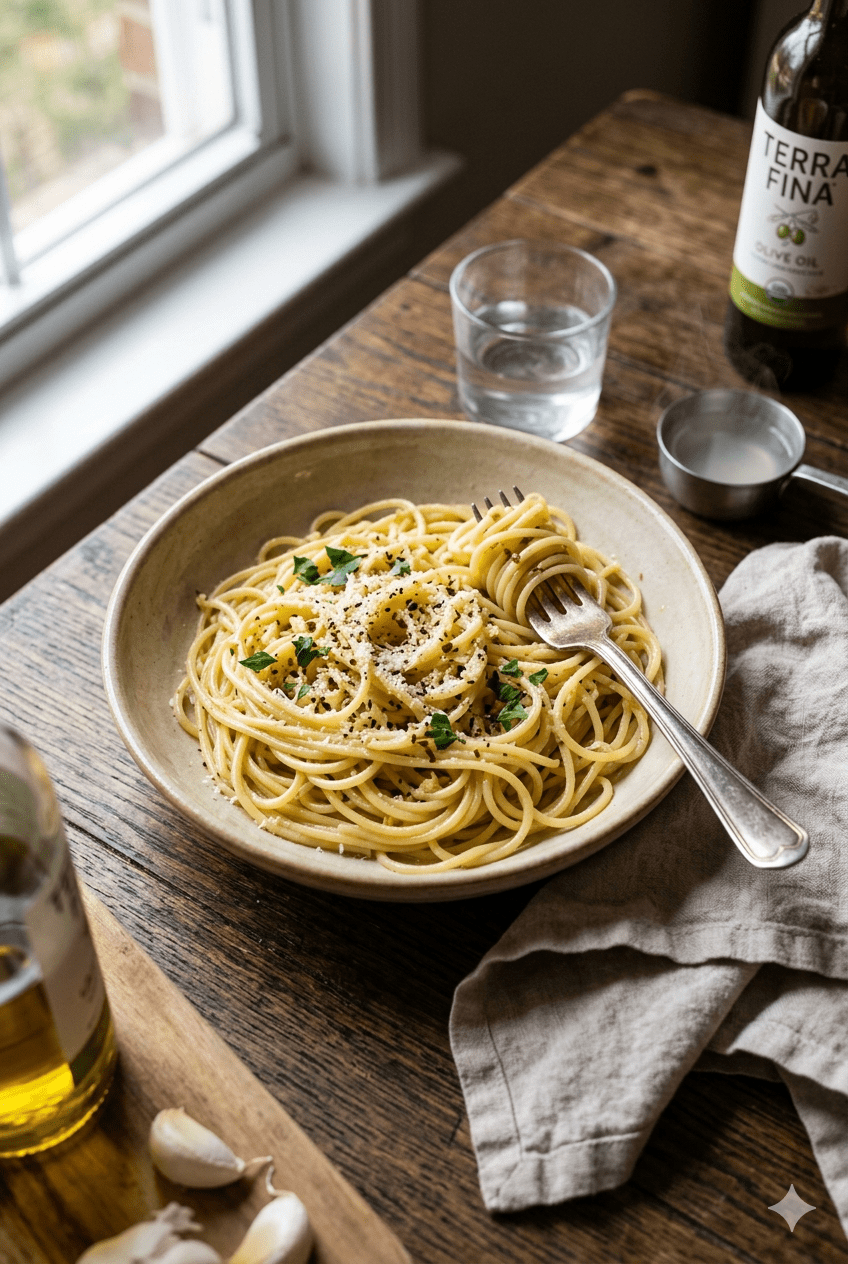
There’s something about pasta that never really gets old.
It’s simple, cheap, and honestly something most people don’t think much about—but when it’s good, it doesn’t feel basic at all. It just feels like the right meal at the right time.
The funny thing is, most people already “know” how to make pasta. Boil water, cook noodles, add sauce. But there’s a difference between just making it and actually getting it right.
This is the simple version—and how to slowly make it better over time without overcomplicating it.
Start simple
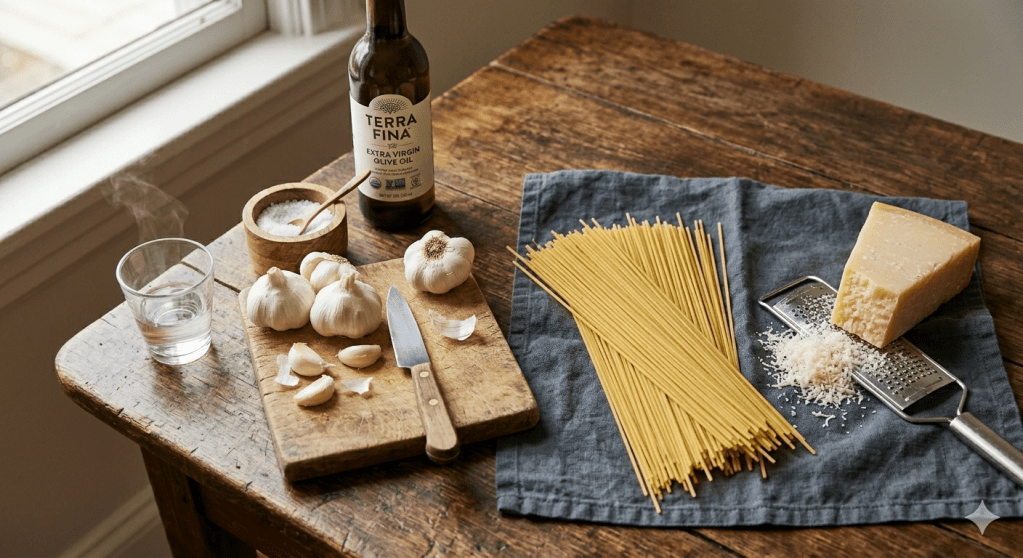
At its core, you don’t need much:
- pasta
- salt
- olive oil or butter
- garlic (optional, but worth it)
- parmesan if you have it
That’s really it.
The mistake people make is trying to turn pasta into something complicated. It doesn’t need that. It just needs to taste like itself, but better.
Salt the water properly
This sounds small, but it changes everything.
Your water should actually taste a bit salty—not bland, not overwhelming. Just noticeable.
If the water is under-salted, the pasta itself starts off flat, and no sauce really fixes that later.
Don’t overcook it
Most people cook pasta too long.
Pull it out a minute or so before it feels completely done. It should still have a bit of bite to it. It finishes in the pan later.
That small detail makes a big difference in texture.
Save a bit of the pasta water
Before you drain it, keep a small cup of the water.
It doesn’t look like much, but it helps everything come together later. It gives the sauce a smoother texture and helps it actually stick to the pasta instead of sitting on top of it.
Build the base in the pan
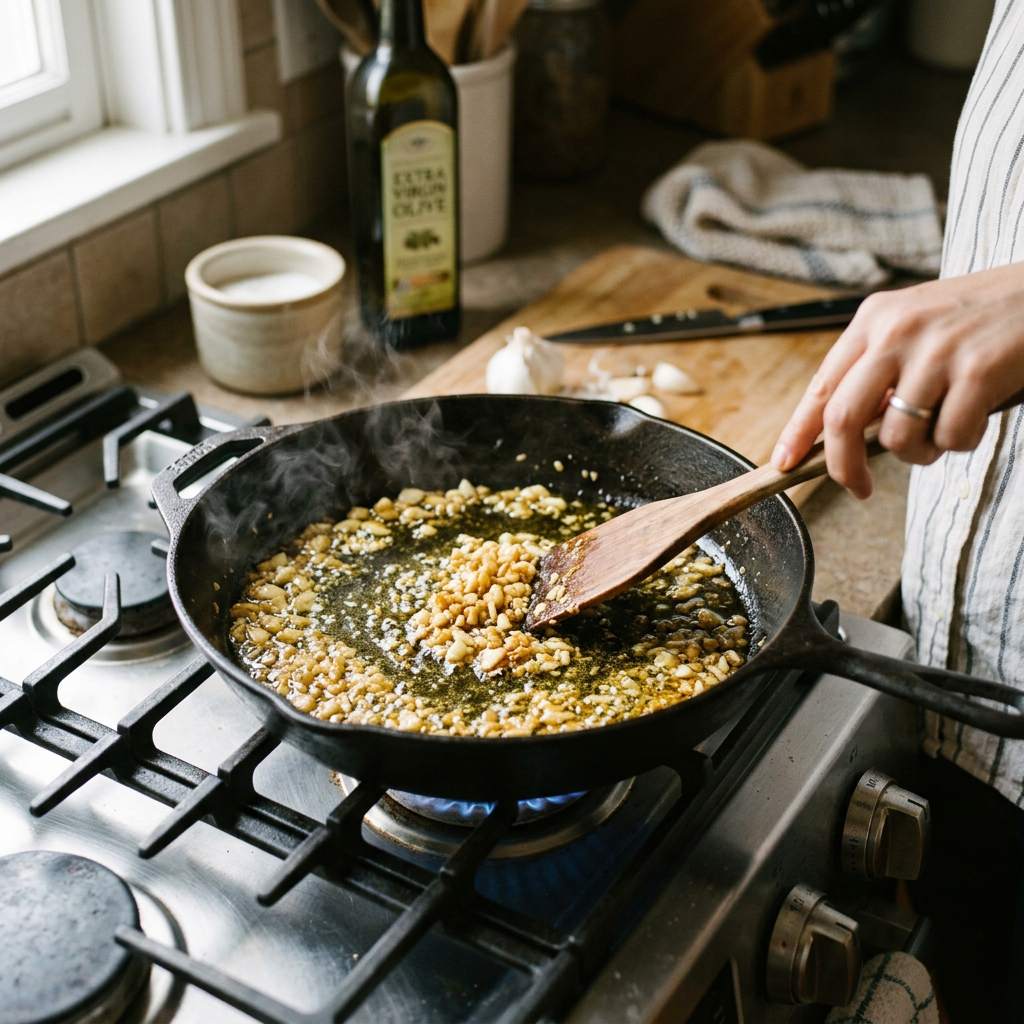
In a pan, heat olive oil or butter.
Add garlic if you’re using it—keep it gentle so it doesn’t burn. You can also add chili flakes here if you want a bit of heat.
Then add the pasta straight into the pan.
At this point, it starts feeling less like “boiled pasta” and more like a proper dish.
Bring it together
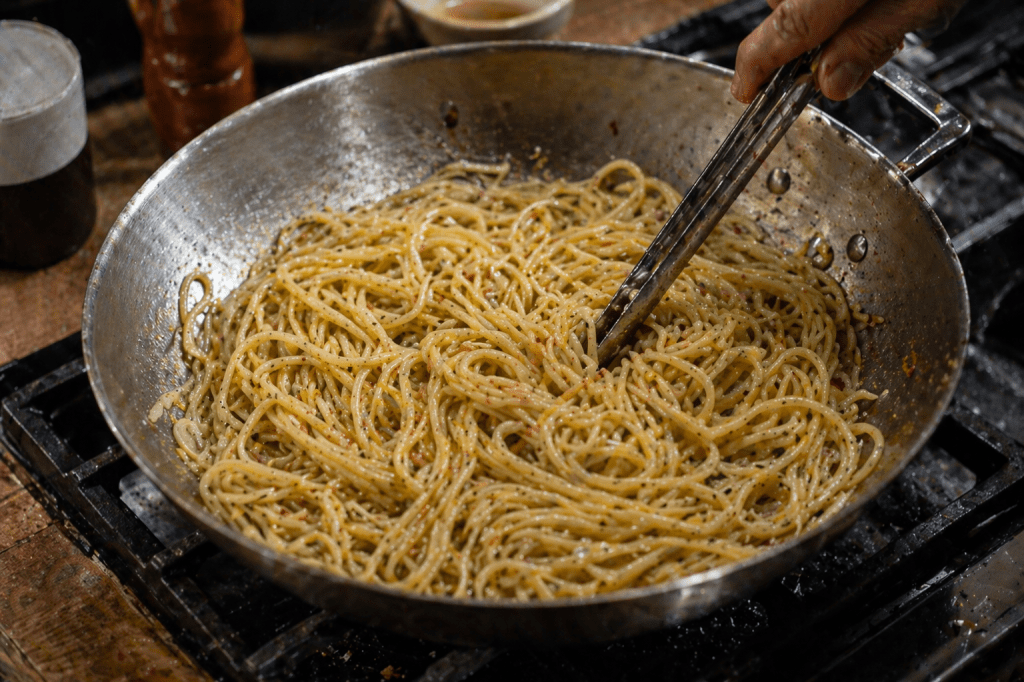
Add a small splash of the pasta water and toss everything together.
This is the part a lot of people skip, but it’s what makes the texture feel right. Everything starts to coat properly instead of feeling separate or dry.
It doesn’t take long—just enough for it to come together.
How to make it better each time
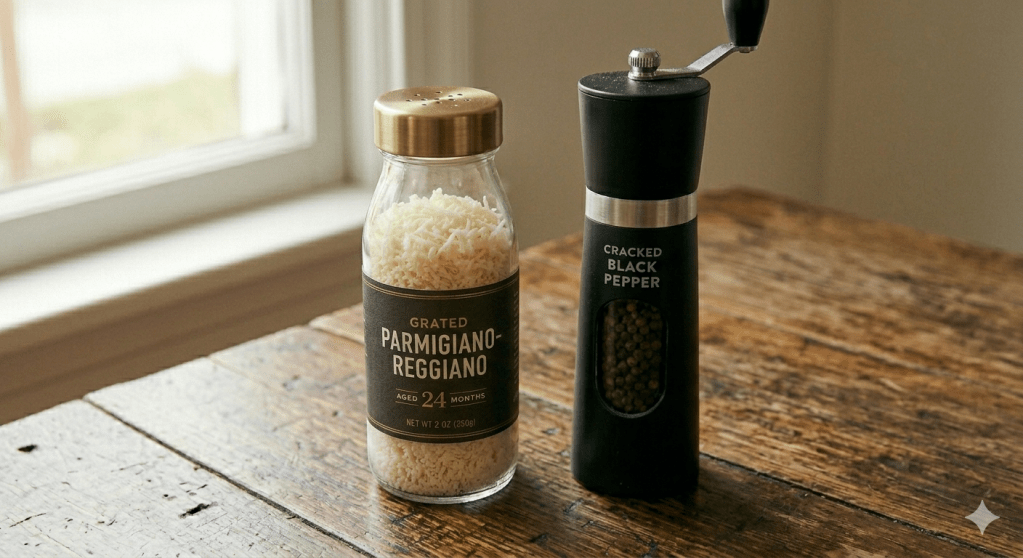
Once you’ve got the basic version down, it’s less about changing everything and more about small adjustments.
Change the fat
- olive oil = lighter, cleaner
- butter = richer, heavier
- both together = balanced and smooth
Add just one main ingredient
Pick one direction, not many:
- parmesan (classic)
- lemon zest (fresh and bright)
- mushrooms (earthy and deeper)
- cherry tomatoes (sweet and slightly acidic)
- anchovies (strong, savory base flavor)
The key is not overloading it.
Pay attention to heat and timing
A little chili changes the whole feel of the dish.
No spice keeps it calm and simple.
Small choices like that matter more than people think.
Finish it properly
Turn the heat off before you’re done, then:
- add cheese if you’re using it
- adjust salt
- add a little pasta water if it feels dry
- toss until it looks slightly glossy
That gloss is usually a good sign you’ve done it right.
Why this matters
Pasta is one of those foods that quietly teaches you how cooking works.
Not through rules, but through repetition.
You start noticing small things—how salt changes flavor, how texture matters, how a small bit of water can completely change the final dish.
It’s not about getting it perfect. It’s more about slowly understanding what makes it good.
Final thought
The best pasta isn’t complicated or impressive.
It’s just consistent, simple, and a little better each time you make it.
That’s usually enough.
 insightstogo.
Leave a comment