
There’s a certain feeling that’s become really common, but still hard to describe.
It’s not exactly anxiety. It’s not exactly pressure. It’s more like everything feels like it needs to be done sooner than it actually does.
Even when you’re technically on time, or ahead, or not behind on anything real—you still feel like you are.
Like there’s always something you should be doing instead of what you’re currently doing.
That quiet urgency has become part of modern life.
And most people don’t even notice it anymore.
Nothing is actually urgent… but it still feels that way

If you break it down logically, very little in daily life is truly urgent.
Most messages don’t need immediate replies.
Most updates don’t change anything in your real life.
Most tasks can wait a few hours, or even a day.
But your brain doesn’t always experience it that way.
A notification pops up, and even if you don’t open it, part of you registers it as something pending.
An email arrives, and suddenly there’s a low-level awareness that it exists.
A message sits unread, and it takes up more mental space than it should.
Nothing is demanding action immediately—but everything feels like it is.
That gap between “can wait” and “feels like it can’t wait” is where the constant urgency lives.
The illusion of falling behind

One of the biggest shifts in modern culture is how easy it is to feel behind, even when you’re not.
You open your phone and see:
someone launching a business
someone traveling
someone working out consistently
someone posting daily content
someone always doing something
None of it is directly related to your life. But your brain doesn’t fully separate it that way.
Instead, it quietly compares:
“I should probably be doing more too.”
It’s not always a conscious thought. It’s more like a background pressure that never fully turns off.
And because there’s no finish line to any of it, the feeling of “catching up” never really arrives.
There’s always more happening somewhere else.
Why downtime doesn’t feel like downtime anymore
There used to be a clear difference between being busy and being free.
Now that line is blurred.
Even when you’re resting, you’re still half-aware of everything you could be doing:
you could reply to messages
you could organize something
you could be productive
you could “use the time better”
So rest doesn’t always feel like rest.
It often feels like paused productivity instead.
That’s why so many people end up reaching for their phone during downtime. Not because they’re bored, but because stillness feels slightly unfinished.
The mind wants closure, even when there’s nothing to close.
Everything is designed to move faster than you
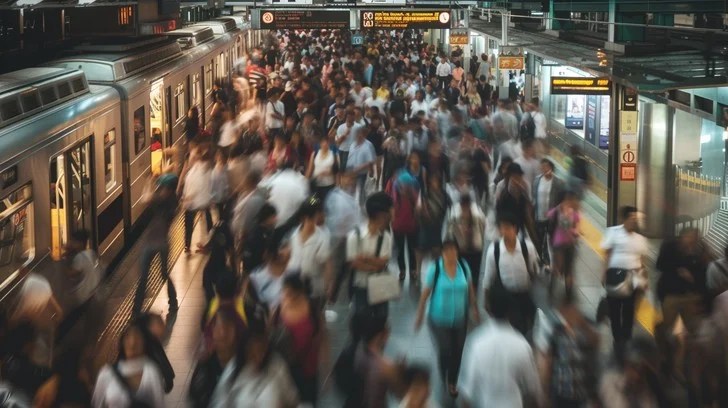
Modern systems don’t really leave space for slow thinking.
Content is short.
Responses are expected quickly.
Trends move in days, sometimes hours.
Even entertainment is optimized for fast consumption.
You’re constantly being moved from one thing to the next before you’ve fully finished processing the last thing.
And over time, your internal rhythm adjusts to that speed.
So when life isn’t fast—when things are quiet or slow—it can feel unnatural. Almost like something is missing.
But nothing is missing. The pace just changed.
The pressure to “keep up” with life itself
There’s a subtle shift that’s hard to notice until you step back.
It’s not just that people are busy.
It’s that people feel like they’re supposed to be in sync with everything happening around them all the time.
Up to date.
Responsive.
Available.
Moving forward.
Even rest gets treated like something that needs to be efficient.
“Productive rest.”
“Optimized mornings.”
“Better routines.”
It turns life into something that always needs improving, even when nothing is wrong.
And that creates a background sense that you’re never quite doing enough of the right things, in the right way, at the right speed.
Why slowing down feels harder than it should

In theory, slowing down sounds simple.
In practice, it feels uncomfortable.
Not because slowing down is bad—but because it removes distraction.
And when distraction is constant, silence feels louder than it used to.
When things get quiet, your mind notices everything it’s been avoiding:
unfinished thoughts
small decisions
delayed responses
unprocessed input
So instead of feeling peaceful, stillness can feel like exposure.
That’s often when people reach back for something to fill the space again.
Not out of habit alone, but out of discomfort with emptiness.
The strange trade-off of modern life
There’s no denying that modern life has made many things easier.
Communication is instant. Information is accessible. Connection is constant.
But the trade-off is subtle.
We gained speed, but lost pause.
We gained access, but lost quiet.
We gained connection, but lost separation.
And without those small gaps—those moments where nothing is happening—everything starts to feel slightly compressed.
Like life is happening, but without enough space between moments to fully feel it.
Final thought
Most of the time, urgency today isn’t about real deadlines or real pressure.
It’s just a feeling that everything is happening slightly faster than you are.
And because it’s always there in the background, it starts to feel normal.
But it isn’t necessarily how things have to feel.
Sometimes the most noticeable change isn’t what’s added to life.
It’s what slowly disappears from it without anyone actively deciding to remove it.
Like stillness. Or space. Or the sense that not everything needs to be responded to immediately.
And once those things are gone, urgency doesn’t feel like an exception anymore.
It just feels like the default.
 insightstogo.
Leave a comment